
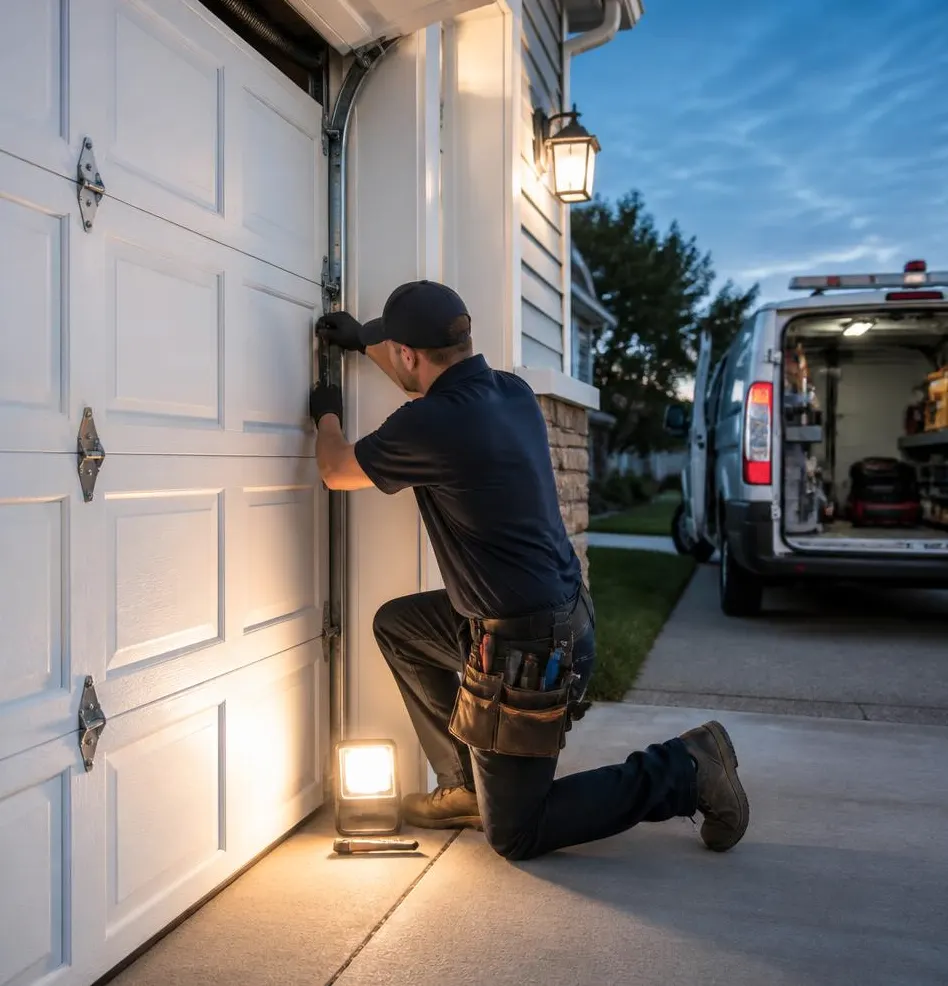
Skip this and the math is simple: a garage door that fails in a windstorm doesn't just mean a dent or a jammed track. Once wind gets inside a garage through a buckled or blown-in door, it pushes up against the roof from the inside, and that's how homes lose shingles, soffits, and sometimes whole roof sections. Insurance claims for wind-driven structural damage run far higher than the cost of a new door or a reinforcement kit. One missed storm season is usually what it takes to find that out the hard way.
Why the Garage Door Is Your Home's Weakest Wall
Every other exterior wall on a typical house is a solid, continuous structure tied into the framing. The garage door is the opposite: a large panel of thin steel or wood sections, hinged together, held in place by tracks, rollers, and a spring system that was engineered mainly to lift the door, not to resist a sustained lateral push. Most residential doors are rated for wind loads far below what a serious gust front or the remnants of a coastal storm can deliver. Add in Fauquier County's mix of older homes with original doors from decades ago and newer builds with lighter-gauge panels for cost savings, and you've got a lot of garages that were never built with high wind in mind.
When that door fails, the pressure inside the garage has nowhere to go but up, which is why structural engineers consistently point to garage doors as the first failure point in wind-related home damage.
What High Wind and Heavy Rain Actually Do to a Garage Door
It's rarely a single dramatic event. More often it's cumulative: a track that's a quarter-inch out of alignment lets the door flex more than it should during gusts, which stresses the rollers, which loosens the hinges, which lets the next storm push even further. Heavy, wind-driven rain finds every gap in worn weatherstripping and ends up pooling at the base of the door, which is a particular problem on older concrete slabs that have settled or cracked over the years. Panels that look fine in calm weather can bow visibly under sustained wind pressure, and repeated bowing eventually cracks the panel seams or pulls the hardware loose from the track.
Storm-Proofing Steps That Actually Matter
Check and tighten the hardware
Hinges, roller brackets, and track bolts loosen gradually from normal use. Walk the door with a wrench and tighten everything you can reach. This alone prevents a surprising amount of wind-related flex.
Inspect the tracks for alignment
Stand back and sight down each track. If you see gaps, bends, or spots where the rollers aren't riding smoothly, the door is more vulnerable to popping off-track under pressure, which is exactly what happens in a bad gust.
Add horizontal bracing if your door doesn't have it
Reinforcement struts, mounted horizontally across the back of each panel, are one of the most cost-effective upgrades you can make. National retrofit kits typically run in the low hundreds of dollars installed, which is a fraction of the cost of storm damage. Older doors especially benefit, since many weren't built with bracing as standard.
Replace worn weatherstripping and check drainage
Bottom seals harden and crack over a few years of freeze-thaw cycles. A new seal keeps wind-driven rain out and also improves the door's resistance to lateral pressure by closing the gap the wind would otherwise exploit. While you're down there, check that water drains away from the slab rather than toward it — a common issue on older foundations that have settled.
Install a battery backup on the opener
Coastal storm remnants and high-wind events in this area often bring power outages along with them. A battery backup means you're not stuck manually hoisting a heavy door in the rain, and it keeps the auto-reverse safety feature functioning if the power cuts out mid-cycle.
Don't ignore the spring system
Springs under extra strain from wind-related flex wear out faster. If a spring looks stretched, rusted, or the door feels heavier than usual when moving it manually, it's close to failing — and a spring failure during a storm, when you need the door to seal tight, is a bad time to find out.
A Pre-Storm Checklist
- Tighten all visible hardware — hinges, brackets, track bolts
- Sight down both tracks for bends or misalignment
- Add reinforcement struts if the door doesn't already have them
- Replace bottom seal and side weatherstripping if cracked or flattened
- Confirm water drains away from the garage slab
- Test the opener's battery backup and auto-reverse function
- Look over the springs for stretching, rust, or visible wear
- Clear gutters and downspouts near the garage so runoff doesn't pool at the door
When to Call Warrenton Garage Door Experts
If you've got a door with no bracing, tracks that are visibly out of alignment, or a spring that looks like it's on its last stretch, that's past the point of a weekend fix. Our garage door maintenance service covers a full hardware inspection, lubrication, alignment check, and weatherstripping replacement in one visit, which is the most efficient way to catch small issues before a storm turns them into big ones. If your door is older and wasn't built with reinforcement in mind, we can also handle garage door installation with a storm-rated door that's actually built for what this area's weather throws at it. Either way, we'd rather spend an hour checking your door now than get a call after a windstorm.
If a storm's in the forecast and you're not confident your garage door will hold, call Warrenton Garage Door Experts today — we serve Warrenton and all of Fauquier County, and we can usually get a technician out before the weather does.