
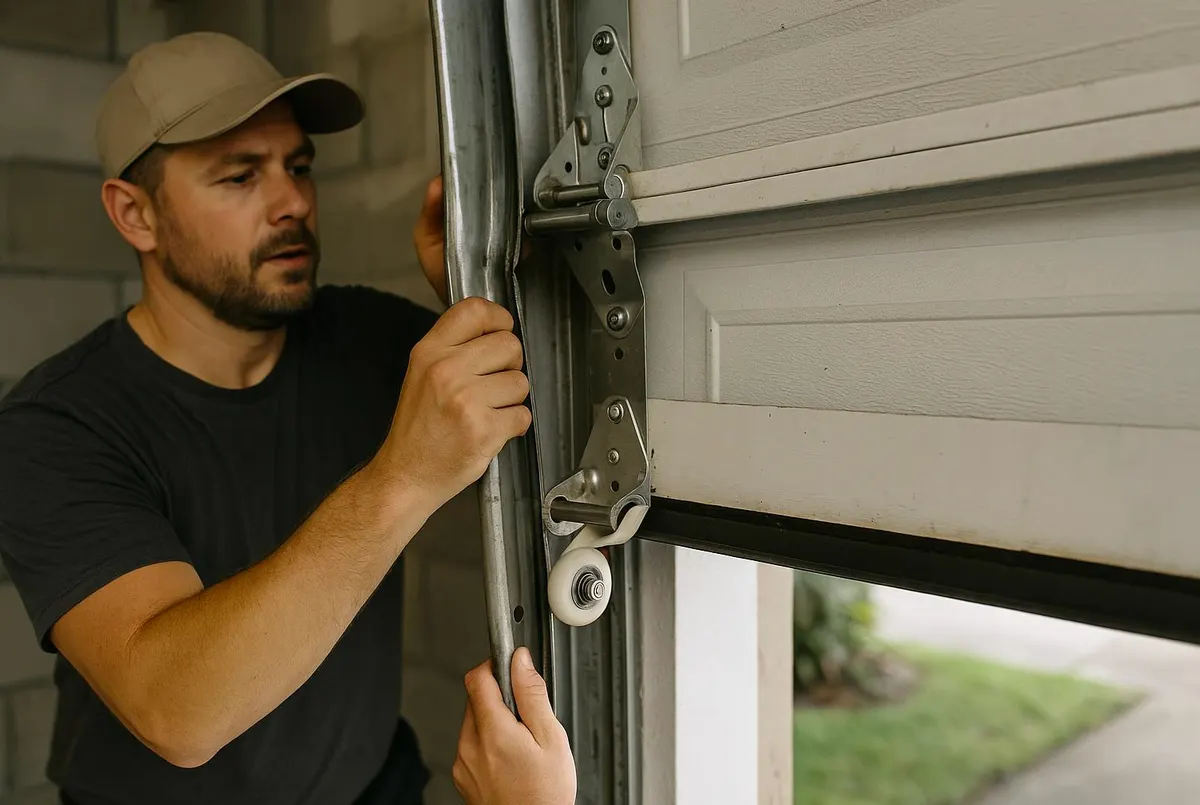
The Mistake Most People Make First
When a garage door starts jerking, scraping, or reversing when it shouldn't, the first instinct is almost always to blame the opener. It's an easy mistake to make — the opener is the part people interact with every day, and a quick internet search will point you toward reprogramming the remote, adjusting the sensors, or spraying everything in sight with lubricant. Those fixes are cheap, fast, and don't require touching anything structural, so they're tempting to try first.
The problem is that a bent or misaligned track isn't a lubrication issue or a sensor issue. It's a geometry problem: the metal channel that guides your door's rollers is no longer straight, level, or properly spaced, and no amount of spray oil fixes that. Worse, forcing a door through a misaligned track — by holding the button down, yanking the emergency release, or manually shoving the door closed — can snap a roller stem, pop the door off the track entirely, or put sudden strain on a cable that's already under tension. What starts as a $150–$300 track adjustment can turn into a full track and roller replacement if it's pushed through instead of inspected.
Symptoms That Point to the Tracks
- Jerky or shuddering movement partway through the open or close cycle, especially at the same spot every time.
- A grinding or scraping metal sound rather than a smooth rolling noise.
- A visible gap between the rollers and the track, or a roller riding on the outer edge instead of inside the channel.
- The door reverses on its own when closing, even though nothing is blocking the sensors — misalignment can cause the door to bind just enough to trip the safety reversal.
- One side of the door hangs lower than the other when fully open, or the door looks crooked in the opening.
- Separation at a wall bracket, where the track has pulled slightly away from the frame.
What a Technician Checks, in Order
1. Mounting Brackets
The track is only as straight as what's holding it to the wall and header. Over years of vibration, bolts loosen. In this part of Virginia, older wood framing also swells during humid summers and contracts in freezing winters, which can gradually work bracket hardware loose or shift it out of square. This is the first thing checked because it's the most common cause and the easiest to fix: re-level the bracket, tighten into solid framing, and confirm the track is plumb.
2. Physical Impact
A bent section of track is often the result of something hitting it — a car bumper, a ladder, a bike, or backing out too fast. Impact damage usually shows up as a sharp kink at one specific point rather than a gradual drift.
3. A Warped or Out-of-Square Door
Older wood-panel doors, common in some of the area's older homes, can warp slightly from moisture exposure over time. A warped door pushes unevenly against the track, which can look like a track problem even though the track itself is fine.
4. Worn Rollers
Nylon rollers can crack in deep cold, and steel rollers can rust or wear unevenly in humid conditions. A worn roller rides against the track incorrectly, creating a wear pattern that mimics misalignment even when the track is straight.
5. Settling or Shifting Framing
In older homes, gradual foundation settling can shift the garage opening just enough that a track that was once properly aligned no longer matches the frame.
How Each Fix Actually Works
- Bracket tightening and re-leveling — loosen the bolts, use a level to reset the track position, then tighten into sound framing.
- Straightening a bent section — done carefully with the right tools; if the metal is kinked or fatigued, bending it back often doesn't fully restore strength, so replacing that section is the more reliable fix.
- Roller replacement — swapped alongside track work when wear is the root cause, since worn rollers will just cause the same misalignment again.
- Full track replacement — necessary when the gap between track and door panel is too wide to correct with adjustment alone.
When to Call Warrenton Garage Door Experts
If your door is scraping, hanging crooked, or reversing unexpectedly, it's worth having it looked at before continuing to operate it. Our Garage Door Repair visits include a full check of the tracks, brackets, and rollers so we can tell you whether it's a simple realignment or something that needs replacement parts. For doors that are aging or exposed to a lot of seasonal temperature swings, our Garage Door Maintenance service catches loose brackets and worn rollers before they turn into a stuck or jammed door.
If your garage door in Warrenton, VA is jerking, scraping, or hanging crooked, give Warrenton Garage Door Experts a call — we'll diagnose it right and fix it the first time.