
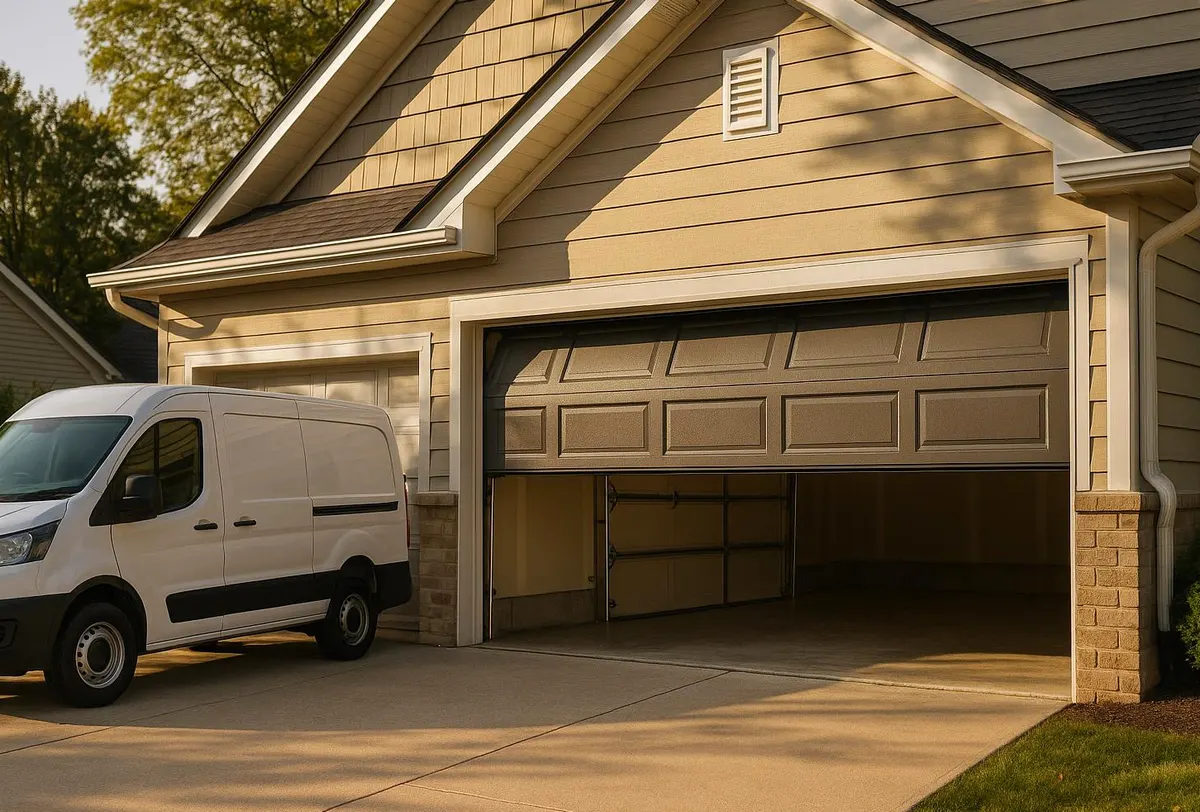
What a Technician Sees This Time of Year
By late October, the service calls start to sound similar: a door that closed fine all summer suddenly reverses halfway down, a spring that snaps on the first cold morning, or an opener that grinds and stutters after months of humidity working its way into the hardware. Most of these aren't random failures. They're the predictable result of a garage door that cruised through a humid summer without any attention, now getting hit with its first real cold snap. A little prep work now saves an emergency call later, usually during the worst possible weather.
Check the Weatherstripping Before the Rain Turns to Ice
Heavy summer rain and humidity are hard on rubber seals. By fall, the weatherstripping along the bottom of the door and around the frame is often cracked, flattened, or pulling away from the track. In a region that swings from heavy rain to icy mornings, a bad seal does more than let in a draft:
- Water that pools at the base of the door can freeze overnight, bonding the panel to the slab.
- Gaps let in cold air that makes garage-stored items (paint, tools, sometimes a water heater) more vulnerable to freeze damage.
- Rodents and debris find their way in through worn seals looking for warmth once temperatures drop.
Replacing bottom seal and side weatherstripping is inexpensive and something a reasonably handy homeowner can do, but it only helps if the door itself is aligned correctly. A door that's slightly off-track will chew through new weatherstripping in a season.
Inspect Springs and Cables Before the Cold Snap Hits
Torsion and extension springs are under constant tension, and cold metal is more brittle than warm metal. A spring that's been stretching slightly all summer due to humidity-swollen wood framing or a door that's drifted out of balance is far more likely to fail on a 20-degree morning than in July. Signs worth watching for before winter sets in:
- The door feels noticeably heavier when lifted manually with the opener disconnected.
- Visible gaps or stretching in the spring coils.
- Fraying on the lift cables near the bottom bracket.
Springs are not a DIY repair — they're under enough tension to cause serious injury if mishandled. But knowing the warning signs means you can get ahead of a snap instead of getting stuck with a door that won't open during a storm.
Rollers, Hinges, and Tracks
A humid Virginia summer tends to leave a film of grime on rollers and tracks, and that grime turns stiff and sticky once temperatures drop. This is a big source of the grinding, jerking motion people notice on the first cold mornings. Cleaning the tracks with a damp cloth and applying a silicone-based lubricant (not WD-40, which attracts dust) to rollers, hinges, and the torsion spring itself goes a long way. For older homes with original hardware, this is also a good time to check rollers for cracking or flat spots — nylon rollers especially tend to degrade after a few humid seasons.
Protect the Opener From Power Blips and Condensation
Coastal storms that reach into Fauquier County often bring power flickers or short outages. A garage door opener without a battery backup becomes a manual-only door during exactly the kind of weather when you least want to be lifting a 150-pound door by hand in the rain. If your opener is more than a few years old, fall is a good time to:
- Test the battery backup, if equipped, and replace it if it's not holding a charge.
- Check that the safety sensors near the floor are clean and properly aligned — condensation and humidity can cause minor drift that shows up as the door refusing to close.
- Confirm the manual release cord works smoothly, in case you need it during an outage.
Older vs. Newer Homes
Homes with original, decades-old doors and openers tend to have thinner panel insulation and older torsion spring systems that weren't rated for today's heavier doors. These setups are more sensitive to temperature swings and often need a tune-up before winter even in a mild year. Newer installations with insulated steel doors handle the cold better, but their openers rely more heavily on electronic sensors, which can be thrown off by moisture and temperature shifts just as easily.
When to Call Warrenton Garage Door Experts
If your door is heavy to lift by hand, making new grinding or popping noises, or the opener has started reversing or stalling as the mornings get colder, that's the window to get it looked at before it fails outright. Our Garage Door Maintenance service covers exactly this: lubricating hardware, checking spring tension and balance, inspecting cables, and testing the opener and safety sensors before winter puts real stress on all of it. If a spring has already gone or the door won't move at all, our Emergency Garage Door Service is built for that — quick response, honest diagnosis, and a fix that holds up through the rest of the season rather than a temporary patch.
If you're in Warrenton, Gainesville, Haymarket, Catlett, Midland, Marshall, The Plains, or Bealeton and want your garage door checked before the first hard freeze, call Warrenton Garage Door Experts. We're a garage door company in Warrenton VA that shows up on time, explains what's actually wrong, and gets it fixed right the first time.